


“October 7 was the beginning of the end of Israel”. Interview with Anwar Khoury – Part 2
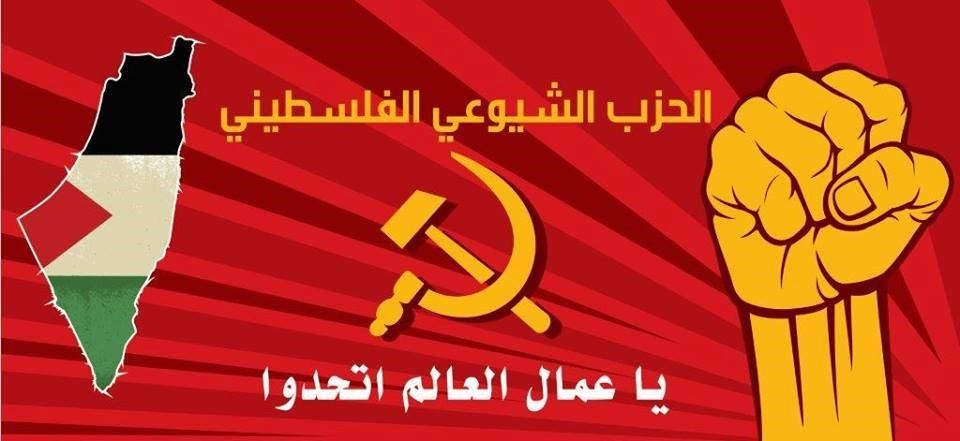
The following interview with Anwar Khoury, member of the Central Committee of the Palestinian Communist Party (PalCP), was conducted in the course of several conversations with PalCP comrades in autumn 2023 and spring 2024. Although the PalCP stands in the shadow of the larger and better-known left-wing organisations PFLP, DFLP and PPP, we consider it a relevant and interesting actor.
This is mainly due to their substantive positions: 1. They has rejected the two-state solution and has engaged in self-criticism, which is to her great credit. 2. it has historically opposed Gorbachev’s betrayal and, in retrospect, also Khrushchev’s revisionism, without at the same time veering onto a Maoist or Hoxhaist course. And 3. today it supports the real existing Palestinian resistance, including its Islamic factions, and at the same time refers positively to the “Axis of Resistance”.
With this interview we want offer the comrades the limited possibilities available to us to bring their positions more strongly into the German and English discourse – and we want to learn from this as KO and as part of the German and international communist movement. To this end, some of our comrades have already drawn attention to the positions of the PalCP in the past and we as an organization have published two Statements from it, one at the beginning of this year and another one for the Palestinian Land Day from it.
Part 1 of the interview introduces the PalCP, discusses the so-called two-state solution, the strategy of national liberation and the allies in the anti-colonial and anti-imperialist struggle in the region. Part 2 deals with the assessment of the PLO and the various resistance factions, such as Hamas and the PFLP, as well as the current situation in the Gaza Strip and the West Bank. The interview was conducted in the beginning of April 2024, is authorised by comrade Anwar Khoury and conducted by Noel Bamen.
Noel Bamen: As a party, you support all forms and factions of resistance. This also includes Islamic resistance organizations such as Hamas and Islamic Jihad. Some on the left always warn against Islamic forces, referring to the experience of the Iranian revolution.
Anwar Khoury: Of course, you have to be careful not to make the same mistakes as Tudeh. And the Tudeh has made mistakes. You have to defend your organization. The Tudeh brought Khomeini to power and was then crushed by him because it did not defend itself or was not in a position to do so. But the situation in Palestine today is completely different from that in Iran in 1979. You have to be careful when comparing these two countries and these two situations and under no circumstances can you equate them. We support the resistance of the Islamic forces against Zionist colonialism. At the same time, we warn that their religious ideology can or will have a negative impact on the future of Palestine.
And what about the PFLP? You support it politically as part of the resistance, like you it advocates a one-state solution, etc. On the other hand, like the RALCP, it follows the view that armed struggle is the central strategic means in the struggle for the liberation of Palestine. Are you also striving for political unity with it?
Our position is based on the conviction that the form of struggle is determined by the objective conditions in our country. We do not reject any form of struggle, but in any form we must be able to bear the consequences. If you do not have the support and strength to bear the consequences of a strategy such as armed struggle, you will lead the masses to destruction. What has happened since 1965, the year the modern Palestinian armed movement began? Where has the slogan of armed struggle taken us? From the defeat of 1967 to the defeat of Amman in 1970/71 and from the defeat in Lebanon in 1982 to the shameful Oslo Accords. All the organizations that made the armed struggle their strategic priority ultimately participated directly – like Fatah, but also the DFLP – or indirectly – like the PFLP – in Oslo. In return for a handful of dollars and various posts in the Oslo institutions, they buried the PLO’s militant role.
But both the DFLP and the PFLP opposed Oslo and continue the armed resistance. So you criticize their subsequent participation in the various governments and institutions of the Palestinian Authority (PA) and their role in the PLO?
Exactly. The DFLP was directly involved in governments under Mahmoud Abbas, among others. We see many opportunistic sides to it. As I said, the PFLP supported the Oslo system more indirectly: it receives money from the government, for example. They themselves say they get it from the Palestinian National Fund, but this is under the control of Abbas. Hamas also took part in the elections within the Oslo system.
But our answer is to boycott the Oslo system completely and instead reform the PLO so that it becomes a genuine liberation front again. To do this, however, it must change its character. The problem has not only existed since Oslo. Even before that, its structure was undemocratic: The member organizations were given quota seats according to their respective political strength. Instead, elections are needed. At the same time, it must include all Palestinians – both those in Palestine and those in exile – and all forms of the national movement – not just the armed groups.
Correct me, but my impression is that the PLO was never as united as other liberation fronts, for example in Cuba, Algeria or Vietnam. Instead of a common high command, for example, all factions carried out their own actions, sometimes in open contradiction to each other.
That is true. The unity was always very weak. In fact, today’s Joint Room of Palestinian resistance factions is better coordinated militarily than the PLO ever was. Politically, however, the situation is different, because only the armed groups are part of the Joint Room. Moreover, its presence is limited to the Gaza Strip.
Is the Palestinian Communist Party (PalCP) a member of the PLO?
The Palestinian CP had been a member of the PLO since the Palestinian National Council meeting in Algiers in 1988. When the party split, the People’s Party (PPP) remained in the PLO. We, as the newly founded PalCP, wanted to join the PLO, but the condition was to accept Arafat’s course. We did not accept that. We are ready to join the PLO, but not on Fatah’s terms. And, as I said, we want to reform it.
Back to the PFLP: So your criticism of it is that it has specifically adopted a sometimes opportunistic policy with regard to the Oslo system and is part of today’s PLO. Are there also fundamental ideological differences?
We do not regard the PFLP and the DFLP as communists, but as leftists in a broader sense: their roots lie in the Arab Nationalist Movement, a pan-Arab, left-wing organization that later aligned itself strongly with Abdel Nasser. After the defeat of 1967, they turned to Marxism-Leninism in their own view. The PFLP was formed in 1968 and the DFLP split from it in 1969. The PFLP was led by George Habash and the DFLP by Nayef Hawatma. Both had a strong influence on their respective organizations. And both organisations are still left-wing nationalists. They are also Marxists. But they are – even according to their own name – not communists.
Let’s move on to the current situation in Palestine: we spoke back in September. At the time, I asked whether the situation in the West Bank since summer 2021 or early 2023 could already be described as an intifada from your point of view. At the time, your answer was that this was not yet the case, mainly because the level of organization was not yet high enough.
That’s right. But before we talk about the recent movements in the West Bank, we need to examine the causes of what is currently happening there. For almost three decades now, the Palestinian people have been under a double assault: One by the Zionist occupation and the other by the PA. The occupation’s attack takes different forms: from persecution, arrest and killing for arbitrary reasons to preventing workers from earning their daily livelihoods by closing border crossings. As far as the Autonomous Administration is concerned, it is nothing more than the extended, striking arm of the occupation. It carries out what the occupation cannot, such as arrests and even murders in the largest Palestinian cities in the West Bank.
In response to this double oppression, various movements emerged, spontaneously and independently of the traditional parties and organizations. They were able to invent new forms of coordination that were difficult for their enemies to pursue. For this reason, neither the occupation nor the autonomous authorities were able to eliminate or restrict them. This phenomenon spread slowly but gradually. However, it had not yet reached the level of an intifada in September last year due to the lack of a revolutionary organization and the absence of its connection to organized mass action.
Then came October.
Then came October. Much has changed since then: The people are being drawn more and more into the liberation struggle and integrated. There are demonstrations every day. There are new armed groups in various cities. Things are moving, but the movement is not yet big. What’s new is that people are organizing themselves and are heavily involved in the struggle. Since 1993, young people have been blinded by PA schools, social media, etc. But October 7 has shaken up the entire population. Sections of the population that were not active in the past are now attacking soldiers. You can already say that Israel has lost this war. Yes, they have killed tens of thousands of civilians. But October 7 stopped the trend of Arab regimes making peace with Israel. For the first time in history, Israel has felt for more than 24 hours that it is standing there naked. And they also know that they have lost the war. But they can’t admit it.
The armed wing of the PFLP, the Abu Ali Mustafa Brigades, declared a few weeks ago that it has now set up its own armed cells in the West Bank. There have also been videos of Hamas fighters openly appearing in West Bank cities.
Exactly, the influx to the large armed resistance factions has also been increasing since October.
And what about the PA?
Two outcomes of October 7 are already clear: two people will go to hell, namely Benyamin Netanyahu and Mahmoud Abbas. Netanyahu will go to prison and Abbas to an old people’s home – in other words, he will leave the country, probably go to Jordan and retire there with his stolen money.
How do you assess the situation in Gaza? Will the resistance hold out or will Israel succeed in ethnically cleansing the Gaza Strip?
There are huge losses: human, infrastructural, etc. But the resistance has already won. Israel has no control whatsoever. Control would mean preventing the resistance from firing rockets. They are also trying to drive people into the Sinai Peninsula. However, our contacts in Gaza tell us that the people there have the following attitude: “We will die rather than be expelled somewhere as refugees.” Given this conviction and strength, I don’t believe that Israel will succeed. Of course we have lost many people. Perhaps the number of people killed will rise to 50,000 or 60,000 by the end of this war. But that doesn’t change the fact that Israel will lose.
October was the beginning of the end for Israel. Hundreds of thousands of settlers have left the country since October. 56 percent of Jewish Israelis have two passports, two houses, two jobs: inside and outside Palestine. We also have the Haredim: 20 percent of the Israeli population. They don’t go to the army, their men don’t work, they pray, study, etc. Israel today is not the same state, the same society as before. I’m sure it’s the beginning of the end, but it will still take time, a few more years.
What do you expect from the international communist and Palestine solidarity movement?
Two things: Firstly, to fight for a ceasefire. And secondly: donations for humanitarian aid, which is so urgently needed in Gaza right now. We collect donations ourselves, which then reach the Gaza Strip via our comrades and contacts.